Gluten-Free Italian Restaurant Guide: Pasta Water and Pizza Prep
For pasta, check the product, sauce, cooking water and draining tools. For pizza, follow the crust through assembly, baking and cutting. A gluten-free base answers one component; the complete Italian order needs its preparation and serving checked.
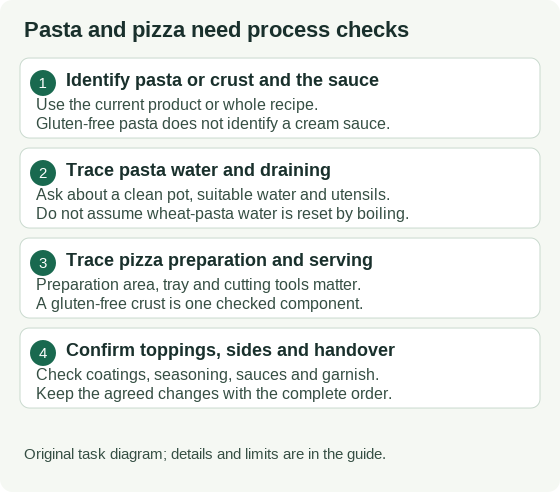
A gluten-free pasta or crust is only the beginning
For an Italian restaurant order, the important distinction is between a suitable base and a complete dish prepared appropriately. A gluten-free pasta product does not identify the sauce, cooking water or draining tools. A gluten-free pizza crust does not explain the preparation area, toppings, tray or cutting utensils.
The Celiac Disease Foundation lists pasta, flour-based sauces and coatings as gluten sources, and colanders and cutting boards as possible cross-contact points. It specifically warns that pizzerias offering gluten-free crusts may not control cross-contact with wheat-based dough. Those points make the process questions useful.
Choose one actual dish to discuss with the kitchen. You are trying to identify what goes into it and how it is prepared, rather than decide that every Italian meal is unsuitable or that every gluten-free menu symbol approves the whole plate.
Identify the exact pasta and the full sauce recipe
Ask which pasta product or house recipe is used. Ordinary wheat pasta is not changed into a gluten-free product by rinsing it, shortening the cooking time or serving less. A differently formulated product needs its own current ingredient and gluten-free information.
For filled pasta, gnocchi or a baked pasta dish, ask about the full recipe and filling as well as the main dough. The dish name does not tell you whether wheat flour, breadcrumbs or another ingredient is included. This is a reason to check the actual product, not a claim about every version of those foods.
Then check the sauce. The Celiac Disease Foundation identifies cream sauces made with a roux and sauces or gravies thickened with wheat flour as examples of gluten sources. Ask whether the exact sauce uses flour, stock, a purchased mix or another component relevant to the gluten question.
A tomato-based or cream-based appearance is not the recipe. Ask for the ingredients, including any additions mixed into the dish before serving. If the sauce is unknown, a suitable plain preparation may be a candidate only if the pasta, toppings and process can also be confirmed.
Ask about the cooking water, pot and draining tools
Have the kitchen describe how it will cook this pasta. Ask whether the gluten-free order uses a clean pot and water separate from water used for ordinary wheat pasta, along with appropriate clean utensils. The pasta product’s package does not answer those preparation questions.
Ask how the pasta is drained and transferred. The Celiac Disease Foundation lists colanders as cross-contact points. A statement that the pasta is gluten-free does not identify whether a draining tool retains food residue or how it is cleaned before this order.
Do not treat boiling as proof that gluten has been removed from water previously used for wheat pasta. Ask for a preparation that avoids that contact path rather than deriving a cleaning method from a cooking temperature. This page does not set a temperature or time that validates gluten removal.
The follow-up should identify the actual arrangement, not merely the word “separate.” Which pot, water, draining method and utensils will be used for this order? Can the person who knows the kitchen process confirm them today? If the process remains unclear, choose another suitable dish with its own preparation checked.
| Stage | Ask for this information | What it does not replace |
|---|---|---|
| Pasta product | Current exact product, ingredients and relevant gluten-free information. | Sauce and preparation checks. |
| Cooking | Clean pot, suitable separate water and handling for this order. | Draining and transfer details. |
| Draining | Appropriate clean colander or another described draining method. | The cleanliness of later pans, tools or serving plates. |
| Sauce and mixing | Complete sauce recipe and appropriate clean pan or utensils. | Earlier unknown ingredients or a different topping. |
| Plate and garnish | Agreed toppings, sides and serving instructions. | Confirmation that the order actually delivered matches them. |
A pizza conversation needs more than the crust name
Begin with the exact crust ingredients and relevant gluten-free information, then identify sauce, cheese or other toppings and seasoning. A crust option on a menu does not describe how a pizza is assembled alongside wheat-based dough.
Ask where the gluten-free pizza is prepared, what surface or tray it rests on, and how tools and utensils are kept appropriately clean. Ask how it is baked, transferred and cut. The point is the described contact path; the phrase “same oven” alone is not enough to reconstruct every part of it.
The Celiac Disease Foundation’s warning concerns controlling cross-contact in pizzerias; obtain the actual preparation details for this location.
A separate clean tray may answer one stage, but it does not identify the bench used before baking or the cutter used afterwards. Follow the crust through assembly and serving. If the staff cannot describe a workable process for the requirement you have communicated, choose another option rather than negotiating from a menu symbol.
For a takeaway pizza, confirm the agreed preparation and instructions with the restaurant. A gluten-free option selected in an app records your request; it does not show that the kitchen or the delivered pizza matched it.
Check coatings, stocks, sides and salad extras
For a grilled meat, fish or vegetable dish, ask whether flour dusting, breading, marinade or a sauce was used before cooking. “No pasta” does not mean there are no relevant ingredients elsewhere. The Celiac Disease Foundation’s dining questions specifically cover flour dusting, sauces, marinades and fried garnish.
For a rice-based dish, ask about the full recipe, stock, seasonings and additions. Rice as a base does not identify a prepared dish’s ingredients or the pan and utensils used. A potato-based dish likewise needs its actual recipe rather than approval from the word potato.
For a salad, check dressing, croutons, crispy toppings and the preparation of the requested version. Removing croutons after they arrive does not establish that they never contacted the other ingredients.
If a side or coating is fried, use the shared-fryer questions. Pasta-water questions and oil questions are different processes; answering one does not settle the other.
Two focused scripts for pasta or pizza
For pasta
“Which exact gluten-free pasta product or recipe is used, and can you check the full sauce ingredients?”
“For this order, will you use a clean pot and water separate from wheat-pasta cooking, with appropriate clean draining tools and utensils? How is it mixed with sauce and served?”
For pizza
“Can you identify this crust and the sauce and toppings, and explain how the pizza is assembled away from wheat-dough residue?”
“What surface, tray and cutting tools are used for this order, and how will the gluten-free instructions reach the kitchen and person serving it?”
State the actual dietary requirement before these questions. If celiac disease or a separate allergy applies, explain it accurately. Use the general whole-order card for the handover and unresolved-information steps.
Listen for a description of the current recipe and process. If the reply is only “we offer gluten-free pasta,” ask for the specific cooking and sauce answer still missing. Do not repeat a question once it has been clearly answered; follow the next unresolved stage.
Keep a specific record and a suitable backup
A useful pasta note can say: “exact pasta identified; sauce recipe checked; clean pot described; draining process not confirmed.” A pizza note can say: “crust product identified; bench and tray arrangement explained; cutting tool still unknown.” Neither should be compressed into a permanent restaurant approval.
If one stage cannot be confirmed, another dish may be a candidate after its own ingredients and preparation are checked. A plain-looking main or salad is not an automatic fallback. If nothing workable can be arranged, use a suitable checked backup or choose another meal.
Keep the location, date and current answer with the record and recheck relevant changes on the next visit. These questions do not inspect a kitchen, validate cleaning equipment or measure the delivered food. For illness, suspected exposure or a personal diet question, obtain appropriate healthcare advice rather than using taste or lack of symptoms as verification.
Keep the facts and the next question
Download the plain-text record, or copy the fields below. Leave missing information marked unknown.
ITALIAN RESTAURANT GLUTEN-FREE ORDER RECORD
Location, date and exact dish:
Actual dietary requirement:
Pasta/crust product or complete recipe:
Filled pasta or topping ingredients:
Full sauce recipe and thickener:
Pasta pot and water arrangement:
Draining and transfer tools:
Pizza assembly surface and tray:
Baking, transfer and cutting arrangement:
Other coatings, marinades, stock and sides:
Clean cookware and serving utensils:
Agreed changes before preparation:
Delivered dish matches the order:
Unconfirmed fact and suitable alternative:
What needs rechecking next visit:
This record is not a kitchen inspection, cleaning validation or gluten test.
Try these reading checks
These are original fictional situations for practising the distinctions in this guide.
A fictional restaurant has gluten-free pasta but cooks it in water already used for wheat pasta. Does the package claim answer that preparation concern?
No. Product ingredients and cooking water are separate questions. Ask for an appropriate clean preparation and separate suitable water; do not assume boiling removes the gluten contact.
The gluten-free pasta and cooking process are identified, but a cream sauce recipe is unknown. Is the plate complete?
No. The sauce remains an ingredient question. Identify the actual recipe, including any flour or roux, or agree on a suitable alternative preparation before the food is cooked.
A fictional pizza uses a checked gluten-free crust and a clean tray, but the cutting tool is unconfirmed. Does the tray settle every stage?
No. Follow assembly, baking, transfer and cutting separately. A clean tray answers one contact point, not an unidentified later utensil.
A waiter removes croutons from a delivered salad. Does that establish the requested replacement avoided their contact?
No. Removing them does not describe earlier preparation or contact with the salad. Pause and clarify a properly prepared replacement and the rest of the order.
Sources and scope
The Celiac Disease Foundation identifies pasta, flour-thickened sauces, coatings, colanders, preparation surfaces and pizzeria cross-contact, and supports asking about clean cookware and restaurant preparation. The pasta-water and pizza-stage questions are original applications to the contact paths described, not a validated cleaning protocol, chain rating or inspection. No oven, meal or restaurant was tested.
Sources checked 2026-11-03. A check date records when the listed information was read; it does not mean the source or rules changed on that date. The examples, diagram and record are original teaching material.