Practical guide
Gluten-Free Pasta and Shared Cooking Water: Keep the Whole Route Separate
For the gluten-free portion, use fresh cooking water and an appropriately cleaned pot, draining tool, utensil and receiving dish. Water already used for wheat pasta has been in contact with gluten-containing food. Keep sauce, tasting and serving on the same protected route; a clean pot alone does not resolve every later step.
On this page
Why the cooking water is part of the decision
A gluten-free pasta package describes the pasta you bought. It does not describe the water, the spoon used to taste it, a sauce added later or the draining equipment. NIDDK says cross-contact can occur while food is prepared or served and recommends storing and preparing gluten-free foods separately from foods that contain gluten.
Water that cooked wheat pasta has already been in direct contact with a gluten-containing food. Do not transfer that cooking medium into the gluten-free route. Start with fresh water in an appropriately cleaned pot rather than relying on clearer-looking water, dilution or more boiling as verification.
This is an application of the documented separation principle. The sources do not provide a measured gluten result for your water or establish a boiling time that makes shared water suitable. Follow the exact pasta’s preparation instructions for its quantity and cooking method.
Sources: [1].
Choose a one-pot or two-pot workflow
On a phone, scroll within the table. Keyboard users can focus it and use arrow keys.
| Constraint | Setup before cooking | What still needs attention |
|---|---|---|
| Two pasta types cooked together in time | Two clean pots with separate fresh water, identified cooking tools and draining routes. | A spoon, colander or sauce ladle must not silently cross between the two. |
| One suitable pot available | Plan separate cooking runs. Clean the washable pot appropriately before the gluten-free run and refill with fresh water. | Keep the draining tool, receiver and utensils ready; do not pour retained wheat-pasta water back into the pot. |
| Draining equipment cannot be cleaned suitably | Choose another suitable clean draining method or tool that fits the recipe. | A clean-looking handle does not describe residue in the food-contact openings. |
A household may cook the gluten-free portion first because that makes its workflow easier to protect. “First” is a scheduling choice, not proof that every later tool stayed separate. If wheat pasta was cooked first, changing the water without addressing residue on the washable pot is also an incomplete description.
Coeliac UK recommends hot soapy water for washable pots and utensils, or a dishwasher with suitable detergent. Follow the item and machine instructions. That guidance does not require buying a permanently dedicated version of every washable pot, nor does it validate every porous or complex draining tool.
Follow the whole pot-to-plate route
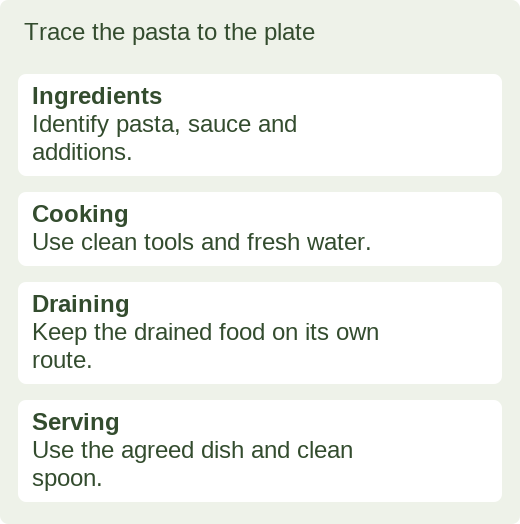
- Identify the exact pasta and follow its preparation directions. Check the actual sauce, seasoning and additions; leave an unidentified ingredient out until it is resolved.
- Prepare a suitable clean pot, fresh cooking water, cooking/tasting tool, draining tool and receiving dish before the pasta is ready.
- If someone else is making wheat pasta, agree which water and tools belong to each run. Keep the intended gluten-free receiving dish out of the other route.
- Cook using the pasta directions. Do not borrow water, a tasting spoon or a stirring tool from the wheat-pasta preparation.
- Drain into the agreed clean route. Do not let the gluten-free pasta touch another food’s residue through a shared colander or receiving surface.
- Add a sauce whose ingredients and handling are known. Portion it with a suitable clean utensil; a ladle returning from the other pasta should not go into protected sauce stock.
- Serve with the agreed clean tool and dish. Keep leftovers identifiable and protected from contact when storing them.
The washable-utensil guide explains washing, cleaning materials, drying and later recontact. Use it for that job. This pasta guide adds the cooking medium and the complete food route rather than replacing the cleaning instructions.
Stop at the actual mix-up
Name what happened before deciding the next step: “wheat-pasta water was added,” “the stirring spoon moved from the other pot,” or “the sauce ingredient is unknown.” These are different events. They should not all be recorded as “the kitchen was shared.”
If a gluten-containing food or its cooking water entered the portion, a newly cleaned spoon does not remove the earlier contact from that food. Do not claim the dish is verified because the tool has now been replaced. Choose another portion prepared through a known route, or an alternative agreed with the person who needs the gluten-free meal.
If the tool contacted another food before it was used on the gluten-free portion, keep that tool out of the protected route and clean it appropriately or use a suitable clean alternative. Distinguish a tool problem caught in time from an event that already involved the meal.
Try three household decisions
These situations are fictional examples of the contact routes, not reports of measured meals.
Case 1
Both pasta packages are identified, but one cook wants to reuse the water after lifting out the wheat pasta. What should change?
Show answer and explanation for case 1
Use fresh water in an appropriately cleaned pot for the gluten-free run.
Removing the wheat pasta does not make its cooking water untouched. The cooking medium is part of preparation; package identity and clean utensils do not settle that separate contact route.
Case 2
Two pots have separate fresh water. A spoon stirs wheat pasta, then stirs the gluten-free portion. Do the two pots settle the problem?
Show answer and explanation for case 2
No. The spoon crossed between the food routes; do not describe the gluten-free portion as verified from the two-pot setup alone.
The protection must continue through stirring, draining, sauce and serving. Replacing the spoon now stops a later transfer but does not erase the earlier event involving the food.
Case 3
The gluten-free pasta was cooked and drained through the agreed route, but the sauce was made with an unidentified stock cube. Is the whole dish confirmed?
Show answer and explanation for case 3
No. Resolve the actual stock cube and sauce ingredients or choose a known suitable alternative.
A correct water-and-tool workflow addresses handling. It does not identify an unknown ingredient or convert an uncertain sauce into a verified one.
Give the next cook one specific handover
Say: “This is the gluten-free pasta run. Use this fresh water, these clean cooking and draining tools, and this receiving dish. Keep the other pasta’s water and tools out. This sauce has been checked; use its clean ladle without returning it from another dish.”
Before eating, resolve anything still marked unknown. Follow ordinary food hygiene and the equipment instructions as well as the gluten-related route. For symptoms or individual dietary advice, contact an appropriate healthcare professional; this process description is not a personal tolerance test.
Sources and further reading
- NIDDK: Eating, Diet, & Nutrition for Celiac DiseaseCross-contact can occur during preparation and serving; store/prepare gluten-free foods separately, ask about complete preparation and agree social-gathering arrangements. Page last reviewed October 2020, checked November 11, 2026.
- Coeliac UK: Cooking at HomeCurrent washable-item detergent/dishwasher guidance, clean oil and condiment handling. The whole cooking/serving routes below are original applications, not tested cleaning or food results.
- Coeliac UK: Cross-ContaminationHome cross-contact guidance on cleaning, clean frying oil, condiments, boards and toasters. Checked November 11, 2026.